Reviewing the I Survived 100 Days of School SVG
As a designer who spends more time staring at stitch simulations than actual fabric, I have learned that not every digital file translates well to thread. We see thousands of design assets flood the market, promising easy wins for Etsy sellers and craft business owners. But when it comes to milestone events like the 100th day of school, the pressure is on. Parents want something cute, durable, and photogenic. Teachers want something legible and appropriate. This is where my review of the I Survived 100 Days of School Svg File begins. I am not looking at this merely as a Graphics product for a printer; I am evaluating it as a potential machine embroidery design source for real-world embroidery projects.
First Impressions and Visual Personality
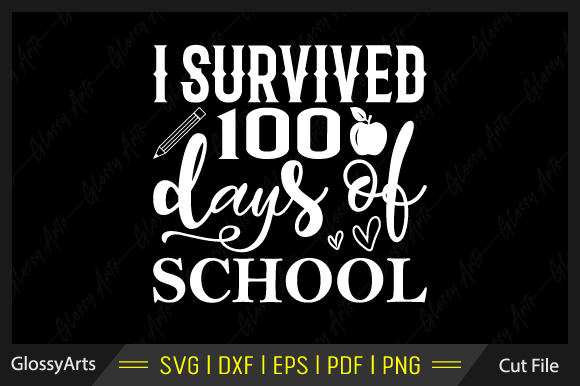
The first thing that strikes me about this specific SVG is its bold, celebratory tone. The phrase "I Survived" implies a playful battle won, which resonates perfectly with the exhaustion and pride felt by kindergarteners and their parents after reaching this academic milestone. Visually, the layout tends to be compact yet impactful. For an embroidery file, this is crucial. Complex, sprawling designs often require massive hoops or result in tiny, unreadable text when scaled down. This design’s inherent structure suggests it was created with versatility in mind.
The mood is triumphant but lighthearted. It does not take itself too seriously, which makes it ideal for custom apparel aimed at children. When I visualize this converted into stitches, I look immediately at the line weight. SVGs are vector-based, meaning they scale infinitely without losing quality. However, for embroidery, we need to ensure that the lines are thick enough to support a satin stitch or a clean running stitch outline. If the original graphic has hairline fractures or overly intricate details, it will become a nightmare to digitize or stitch out. From what I can assess, this design appears to have the necessary robustness for conversion into a functional applique design or a standard fill-based embroidery pattern.
Real-World Application: The Sweatshirt Test
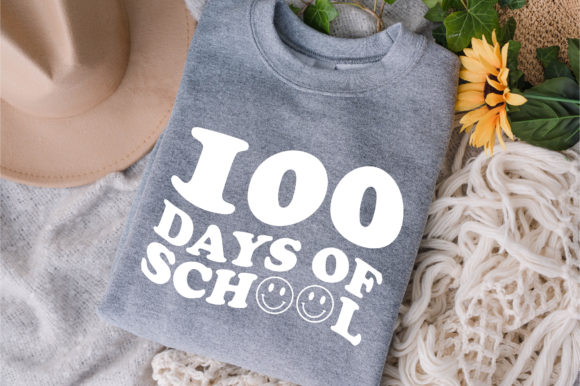
Let us move from theory to practice. Imagine a client orders a personalized gift for their child’s big day. They want a sweatshirt embroidery piece that stands out in class photos. This is the most common use case for this type of Crafts item. I would place this design centrally on the chest of a heather grey or navy crewneck. The contrast is key here. If you are using light thread on a dark fabric, you must ensure your digitizer has accounted for proper underlay stitches to prevent the fabric from showing through.
In this scenario, the I Survived 100 Days of School Svg File serves as the blueprint. A skilled digitizer would likely convert the text into a bold satin column or a lightweight fill stitch depending on the size. For a child’s sweatshirt, I recommend keeping the height around 3 to 4 inches. This ensures the text remains legible without becoming so dense that it creates a stiff, cardboard-like patch on the soft fleece. The result is a handmade product that feels professional rather than homemade in the messy sense. It signals to the buyer that you understand garment construction and stitch behavior.
Versatility Across Products
Beyond sweatshirts, where else does this design shine? I see strong potential for tote bag design applications. A canvas tote with this phrase embroidered in bright, primary colors makes for a fantastic container for the 100 items students are often asked to bring to school. Canvas is a stable fabric, making it forgiving for various stitch density levels. You can go bolder here, perhaps adding a border or small decorative icons if the base SVG allows for expansion.
Another excellent candidate is the embroidered patch. Patches are trending heavily among small shop product lines because they are scalable and easy to ship. By stitching this design onto twill or felt and cutting it out, you create a versatile accessory that can be ironed or sewn onto backpacks, jackets, or hats. This extends the life of the digital embroidery file beyond a single garment. It becomes a modular design asset for your brand. Additionally, consider baby embroidery on onesies, though you must be cautious with placement to avoid irritation against sensitive skin. Always use a soft backing and keep the stitch count reasonable.
Technical Considerations and Pitfalls
While the design is strong, there are areas where caution is required. If you plan to use this on textured fabric like a waffle knit or a fluffy towel, the finer details of the letters might get lost. In these cases, increasing the stroke width during the digitizing phase is non-negotiable. Similarly, be wary of using this on stretchy fabrics like lycra or thin jersey without proper stabilization. A poor stabilizer choice can lead to puckering, which ruins the crisp lines of the text.
For those considering cap embroidery, remember that curved surfaces distort designs. The I Survived 100 Days of School Svg File may need to be arched or adjusted in height to fit the front panel of a baseball cap properly. Do not simply slap a flat design onto a curved surface and expect it to look proportional. Test it. Always test on scrap fabric first. Check your thread colors against both light and dark backgrounds. A design that looks great in black and white mockups might vanish if you choose low-contrast thread combinations, such as yellow on white.
Commercial Value and Brand Consistency
For the commercial embroidery professional, consistency is currency. Using a reliable base like this SVG ensures that your finished product looks uniform across different orders. When customers see a clean, well-stitched design, their trust in your brand grows. It enhances the perceived value of the item. A sloppy stitch-out suggests amateurism; a crisp, well-planned execution suggests expertise. This design, when handled correctly, supports that narrative of professionalism.
Moreover, because this is a seasonal item, speed matters. Having a pre-tested, ready-to-go design allows you to fulfill orders quickly during the rush of the 100th day of school season. It reduces the time spent on custom digitizing from scratch, allowing you to focus on marketing and customer service. This efficiency is vital for maintaining healthy margins in a competitive market.
Final Designer Notes
Before you purchase and start stitching, remember that this product is a digital download only. You will not receive physical items. The images provided are for visualization purposes. Therefore, you must verify the technical specifications yourself. Check if the SVG is compatible with your preferred digitizing software. Confirm the license terms: can you use the resulting embroidery files for commercial sales? Most designers allow this, but always read the fine print.
Inspect the curves and corners of the SVG. Are they smooth? Jagged vectors will result in jagged stitches. If you are not digitizing it yourself, send the file to a professional digitizer and specify that it is for embroidery, not just printing. Mention the intended hoop size and fabric type. This communication ensures the final embroidery file is optimized for your specific needs.
In conclusion, the I Survived 100 Days of School Svg File is a solid contender for your spring inventory. It captures the right spirit, offers flexibility across various personalized gift categories, and, with proper technical handling, can produce high-quality, sellable goods. Treat it with the respect a good design deserves: test it, refine it, and stitch it with precision. Your customers, and their cameras, will thank you.